
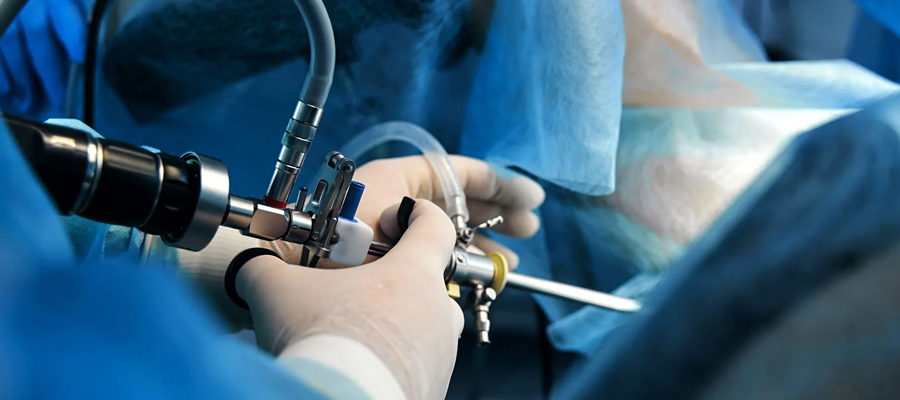
Hysteroscopic Surgery
Hysteroscopic surgery is a minimally invasive procedure that allows the surgeon to examine and treat conditions inside the uterus using a thin, lighted instrument called a hysteroscope — inserted through the vagina and cervix with no external incisions required.
Diagnostic Uses
- Investigation of abnormal uterine bleeding
- Evaluation of recurrent miscarriages
- Assessment of uterine abnormalities before fertility treatment
- Biopsy of the uterine lining
Surgical (Operative) Uses
- Removal of uterine polyps
- Removal of submucosal fibroids
- Correction of uterine septum
- Removal of intrauterine adhesions (Asherman's syndrome)
- Endometrial ablation for heavy bleeding
- Removal of a lost or embedded IUD
Advantages
- No external incisions or scarring
- Performed as a day-care procedure (no overnight stay in most cases)
- Quick recovery — return to normal activities within 1–2 days
- Highly accurate diagnosis and targeted treatment
- Preserves the uterus and fertility
What to Expect
The procedure is performed under local, regional, or general anesthesia depending on the complexity. It typically takes 15–60 minutes. Mild cramping and light spotting may occur for a few days post-procedure.
Book a Consultation
If you are experiencing abnormal bleeding, recurrent miscarriages, or have been advised hysteroscopy, consult our specialist for a thorough evaluation and expert care.